Reach up and touch your chin — that little bony point jutting out below your bottom lip. You've had it your whole life and probably never questioned it. But here is the strange part: you are the only creature on Earth that has one. Not chimps, not gorillas, not a single other primate, living or extinct. And of all the mysteries in your body, this ordinary lump of bone is one science genuinely cannot explain.
01 · The oddityA bump that belongs to exactly one species
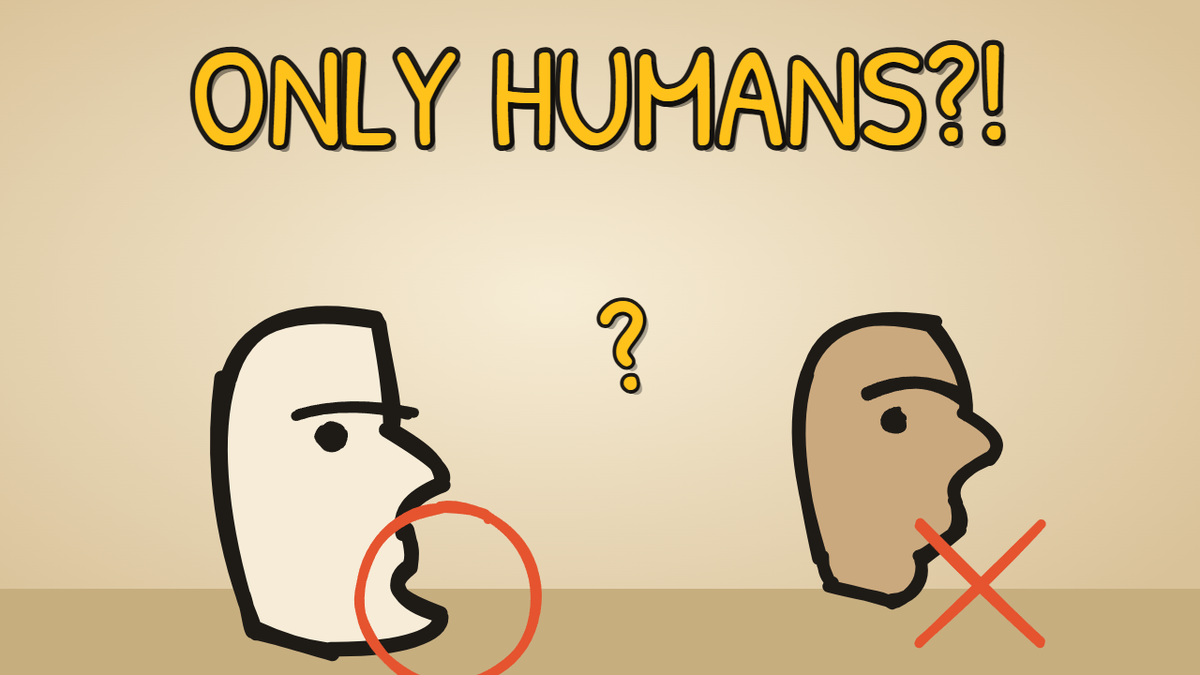
Anatomists call it the mental protuberance — from the Latin mentum, meaning chin, nothing to do with the mind. And it is a true one-off. A chimpanzee’s lower jaw slopes straight back from the teeth; ours pokes forward into that distinctive point. Look across the whole animal kingdom and you won’t find another example. The projecting bony chin is what biologists call a human autapomorphy — a trait that evolved in us and nobody else.
02 · The cousinsNot even the Neanderthals had one
Here’s the part that really nags at anthropologists. Our closest-ever relatives, the Neanderthals — who we shared the planet with, and even interbred with — didn’t have chins either. Their lower jaws were flat or receding, sloping back like every other hominin’s. (Some researchers argue Neanderthals had a faint chin-like contour in the soft tissue, so the line isn’t razor-sharp — but the strongly projecting bony chin you’re touching right now belongs, as far as we can tell, to Homo sapiens alone.)
03 · The wrong answerIt's not for chewing
So what’s it for? The gut instinct is obvious: it’s a lump of extra bone, so surely it braces the jaw against all that grinding. Tidy. And wrong. When researchers led by Nathan Holton actually modelled the forces — running finite-element analysis on the jaw — the chin turned out to sit in completely the wrong place to help resist chewing loads. In some cases the developing jaw got mechanically weaker, not stronger. Whatever the chin is doing, it isn’t holding your jaw together while you eat.
04 · The other wrong answersNot speech, not seduction
Maybe it’s for talking, then? No — you don’t need a chin to speak, and plenty of chinless creatures make complex sounds. A mate-attraction ornament, like a peacock’s tail? The evidence for that is thin, and a byproduct-of-development explanation fits the data at least as well. One by one, the neat stories fall over. Which is how a perfectly ordinary bit of your face ended up as an open scientific argument.
The leading idea isn't that the chin does a job badly. It's that the chin was never for anything at all — it's a leftover, a bit of jaw the rest of your face walked away from.
05 · The leading ideaYour face shrank and left the chin behind
Here’s the front-runner, and it’s a strange one. Over the last hundred thousand years or so, the modern human face did something dramatic: it shrank. It got smaller, flatter, and tucked itself back underneath our big round braincase — our faces ended up roughly 15% shorter than a Neanderthal’s. And as the whole face pulled inward and up, the very bottom edge of the lower jaw got, in a sense, left behind. Everything above it retreated; that basal rim stayed put, sticking out. That leftover little ledge is your chin. On this account, it’s not a feature — it’s a remainder.
06 · The deeper whyWe may have tamed ourselves
And why did the face shrink in the first place? The leading suspect is that we essentially domesticated ourselves. As humans became more social and less aggressive — roughly from 80,000 years ago, as populations grew more connected — average androgen reactivity dropped (loosely, testosterone’s grip on facial growth loosened), and that yields a smaller, softer, more gracile face. This is the “craniofacial feminization” argument (Cieri and colleagues, 2014), and it’s a hypothesis, not a proven fact. Cooking and softer food, meaning far less heavy chewing, likely nudged things along too.
07 · The payoffSo what is a chin, really?
Here’s where honesty matters: this isn’t settled. The byproduct story is the leading idea, but not the only one. In 2015, William Pampush pushed back hard, calculating that the chin emerged around 77 times faster than the average morphological trait in the primate family tree — far too fast, he argued, to be a passive accident, which implies natural selection was shaping it for something. So the truth is oddly satisfying: one of the most obvious features on the human face is still a genuine open question. Your chin may be the one bit of your skeleton with no clear job — a small evolutionary shrug — and yet it’s also one of the very things that makes a face look unmistakably, recognisably human. Chin up.
The animated version
Same answer, told as a little animated story with the strange little stickman acting it out. Dry, quick, and — obviously — correct.
▶ Video dropping soon — subscribe on YouTubeQuick questions
Did Neanderthals have chins?
Not the kind you have. Neanderthals had flat or receding lower jaws with no projecting bony point. Some researchers argue their soft-tissue jaw contours count as a chin in a loose sense, but the distinctive forward-jutting bony chin — the mental protuberance — is essentially unique to Homo sapiens.
What is the chin actually for?
Honestly, nobody is sure. The tidy explanations — chewing support, speech, mate attraction — all fail on close inspection. The leading view is that the chin isn't for anything: it's a leftover from our face shrinking. But that's still argued.
Doesn't the chin strengthen the jaw for chewing?
That's the obvious guess, and it's wrong. When researchers modelled the forces (Holton and colleagues), the chin turned out to sit in the wrong place to resist chewing loads — and in some cases the jaw got mechanically weaker as the chin developed. Chewing doesn't explain it.
Why did the human face get smaller?
The leading idea is "self-domestication": as humans became more social and less aggressive, average androgen reactivity (roughly, testosterone's effect) fell, producing smaller, more gracile faces — a change traced across the last few hundred thousand years. Softer, cooked food meaning less chewing likely helped too.
What's the scientific name for the chin?
The mental protuberance — from Latin mentum, "chin," nothing to do with the mind. It's the bony prominence at the front of the lower jaw (the mandibular symphysis).
Our sources
// every claim on this page was checked before it went up